Healthcare has never had more data, more research, or more AI-generated insight—but it still struggles to produce behavior change. That gap framed the Bescy Practitioners' Network conversation, “Behavioral Science in Healthcare: Inside the Work,” held on July 29 and moderated by Scott Young and Grace Lewallen.
The panel brought together three perspectives on the same problem. Katy Irving, Global Head of Behavioural Science at Healthcare Research Worldwide and founder of HRW Shift, came at the issue from the agency side, where she uncovers how healthcare professionals make decisions under uncertainty and information overload. Eden Brownell, founder of empathAIze Labs and behavioral scientist, focused on where technology meets human behavior, asking what a tool is really asking of the person expected to use it. Suzanne Kirkendall, Founder & CEO of Verelon, brought a consultant’s understanding of what medical affairs, commercial, and marketing teams are being asked to do, and how to bring behavioral science to life in the real world.
There is no one way into this career
None of the panelists took a direct path. Eden started in theater, a field she described as asking the same question behavioral science asks: What makes a person act? Katy studied media and communication, wrote a master's dissertation quantifying doctor-patient interactions in Grey's Anatomy and House, and parlayed that into healthcare market research before founding HRW Shift in 2016. Suzanne started in medical science on a pre-med track before health psychology and early text-message adherence interventions pulled her toward public health and consulting.
Slow down the problem before you speed up the solution
A key question up for debate was: Which is the more difficult problem in healthcare, understanding behavior or changing it? The group leaned heavily toward understanding, because the problem as handed to you is rarely the true problem.
For example, an organization says clinicians are not completing a required review, so a stronger reminder is needed. Eden described how behavioral science slows that assumption down before jumping to a solution. Do clinicians know what is required? Does the request arrive at the right moment? Is this a motivation problem or a workflow problem? The intervention you design depends entirely on which answer is true.
Suzanne made a similar point about problem definition. Business teams often walk in certain they know the problem because they are looking at it through a KPI lens, such as new prescriptions. Breaking the KPI down into the specific behaviors and barriers can lead to entirely different research and solution paths. Katy added that some organizations still hold an implicit belief that healthcare professionals make purely rational decisions, and therefore that better data will speak for itself. But in reality, what overwhelmed clinicians need is help making decisions faster, not another paper to read.
Little-E and big-E engagement
Digital health gave the panel its sharpest measurement discussion. Suzanne offered a distinction between little-E and big-E engagement. Little-E covers logins, clicks, and messages delivered. It’s easy to count, so it gets counted. Big-E engagement asks whether people are actually doing the real-world behaviors the intervention was built to drive; a diabetes companion app does not exist for the purpose of someone pushing a button every day, it exists so their health improves.
Eden, a self-described “recovering engagement strategist,” pushed further. High engagement can even signal friction, as when someone returns to an app repeatedly because they cannot find what they need. Engagement metrics earn their keep only when connected to a theory of change. Katy noted that as interventions become more personalized, measuring downstream behavior gets harder, since it often relies on users logging behaviors themselves.
AI: Where it helps and where it’s hype
The panel resisted both AI cheerleading and AI doom. Eden's framing was the anchor: AI earns its place when it reduces cognitive burden, improves a meaningful decision, or directs human attention where it’s most needed. It becomes hype when it’s bolted onto a system that was never designed around user behavior. In her words, AI can make a bad workflow move faster; it doesn’t make it a good workflow. Adoption itself is a behavior change problem, and the unit of adoption is the behavior the technology asks someone to change, not the technology.
Katy pointed to pilots in radiology where well performing tools still failed because of algorithm aversion and workflow mismatch. Suzanne added a reality check from the commercial side of pharma: There is currently far less AI in production for patient and HCP communications than the hype suggests, which creates room for a more measured, behaviorally informed approach.
Earning the seat at the table
The final stretch turned to advice for practitioners building behavioral science into their organizations. A few key tips:
Start smaller than you want to. Pick something low-risk, concrete, and measurable, then turn it into a case study. The purpose of the first project is a story that builds momentum.
Lead with their problem, in their language. Suzanne shared an approach born of lessons learned the hard way early in her career: understand what drives the person in front of you before you pitch anything, open with the outcome they care about rather than the method, and give them a business case they can easily repeat in other rooms, because the decision usually happens without you present.
Reframe “convincing” as asking better questions. Eden pushed back gently on the idea that leaders need convincing at all. They are already living with low adoption and stalled implementations. Behavioral science adds value by helping leadership ask a better question before building another intervention.
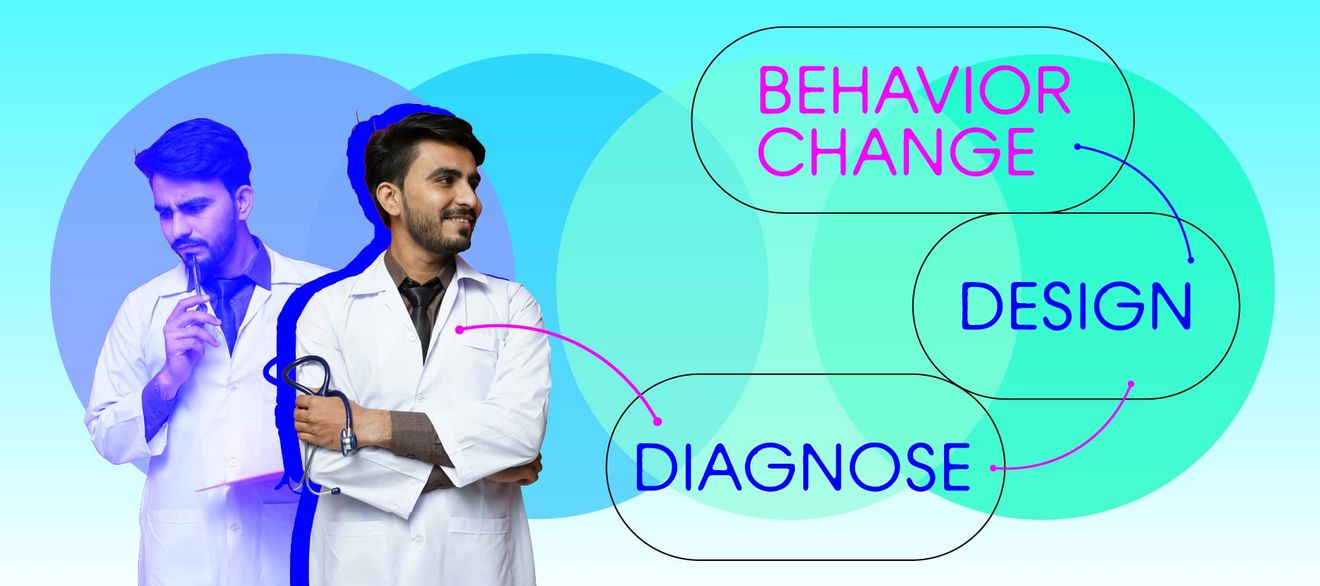
Diagnose before designing, and lose the jargon. Observe the real person in the real context, with all their competing demands, rather than the rational rested person in the strategy deck. As Katy put it, terms like “satisficing” lose the room, while everyday examples land instantly.
Where to go from here
The panelists shared resources for practitioners: UCL's Centre for Behaviour Change and its annual conference, Eden's newsletter Beyond the Nudge and The Practitioners' Room community for women in behavioral science, and Bescy Magazine itself.
The Practitioners' Network hosts free virtual events every month or two, alongside Bescy's interest groups and city chapters in New York, London, Boston, and beyond. Visit bescy.org to join the mailing list, and reach out if there is a speaker or topic you would like to see next.