Andres is the founder of Neuropaz, an international initiative born in Colombia that applies insights from neuroscience and behavioral sciences to one of the most urgent challenges of our time: how to build societies psychologically capable of sustaining peace in an era of uncertainty, technological disruption, and social fragmentation—what many scholars now call the metacrisis. He was our guest for the first 2026 Bescy’s Global South group event on March 13th 2026.
As I waited for the underground to arrive at my stop, I took a sneak peak at two little girls there on a school excursion. “Rock, paper, scissors”, they chanted in unison, giggling. However, as I looked at them I noticed the game was slightly changed, with no result other than the tie. Rocks and rocks, “fist bumps!”; papers and papers, “high five!”; scissors and scissors, “a heart!”, they would celebrate in each round. Up to a point that none of them would ever win - they started coordinating their hand signs in a sequence - rock, paper, scissors and it went on, reinforcing their trust in one another in each round. That lovely interaction between them made me reflect about cooperation, and how , with a little creativity, a given system or a pattern of interactions can be transformed towards a more collaborative approach in which everybody wins, the payoffs are greater, and it is, well, fun to be in.
In this piece, Andres Casas will give us an insight on how we can achieve that type of collaboration through applying a behavioral science perspective to cooperation, peace, and geopolitics.
The current geopolitical state of the world is certainly in everyone’s attention at the moment. Why are we discussing that in a behavioral sciences group? What do behavioral insights and neuroscience add?
At its core, geopolitics runs on human behavior. What looks like a crisis of institutions or global order is also a crisis of how people perceive, interpret, and respond to uncertainty. Today’s moment—often described as a polycrisis—reflects deeper pressures on cooperation: declining trust, rising polarization, and fragmented information environments.
From a behavioral perspective, these are not abstract trends; they are the result of how individuals and groups process threat, identity, and belonging. Research in neuroscience shows that under uncertainty, the brain shifts toward defensive modes—prioritizing certainty, in-group loyalty, and simplified narratives. This can lead to what we might call mindfreeze, where thinking becomes more rigid and cooperation more difficult.
As scholars like Rezarta Bilali (2025) highlight, these dynamics are reinforced by collective narratives—shared stories about who “we” are and who “they” are—that shape how societies interpret geopolitical events. To understand geopolitics, we must examine not only institutions but also the psychological foundations of cooperation.
What behavioral science and neuroscience add to the discussion is both diagnosis and possibility. They help us understand why cooperation breaks down—but also how it can be rebuilt. Evidence shows that norms, trusted messengers, and structured interactions can shift beliefs and behaviors even in polarized contexts.
This opens the door to thinking about peace not just as a political agreement, but as a behavioral system that can be designed. In this sense, “rewiring peace” means aligning how people perceive each other, what they believe others expect, and how institutions reinforce those expectations. In a shifting global order, especially with the rise of the Global South, this is an opportunity to rethink cooperation from the ground up.
In your talk, you argued about a particular psychological state under situations of perceived threat. Can you walk us through that, based on the neuroscience studies you’ve shown, and how that affects cooperation?
What I describe as mindfreeze builds directly on foundational work in conflict psychology, particularly Daniel Bar-Tal’s (2007) concept of socio-psychological infrastructures of intractable conflict. Bar-Tal (2019) shows that under prolonged threat, societies develop stable belief systems—shared narratives about victimhood, identity, and legitimacy—that provide psychological certainty but also freeze thinking.
From a neuroscience perspective, this aligns with evidence that perceived threat activates defensive brain systems, biasing cognition toward vigilance, rapid judgment, and identity protection. In this state, people rely more heavily on prior beliefs, exhibit stronger confirmation bias and motivated reasoning. The mind becomes less open to ambiguity or alternative perspectives. What is often underappreciated, however, is how these cognitive patterns are not only individual but also institutionally embedded, a point emphasized by Chris Mantzavinos’s theory of cognitive institutionalism. When mindfreeze takes hold, individuals struggle to take others’ perspectives, update beliefs, or tolerate disagreement . At the same time, institutions and narratives reinforce these patterns, creating a feedback loop in which rigid cognition becomes socially and structurally stabilized. This helps explain why cooperation breaks down even when incentives are aligned or agreements are in place: the cognitive and institutional conditions required for trust and compromise are missing. In this sense, restoring cooperation requires unfreezing both minds, norms and the institutionalized belief systems that sustain them, reconnecting psychological flexibility with institutional design in order to impact transformation at the systems level.
Behavioral Sciences can offer an interesting lens to that. Beyond traditional institutions or government tools, leveraging social norms and psychological concepts can help build peace. Are there some traditional interventions and experiments that help bridge this intergroup bias?
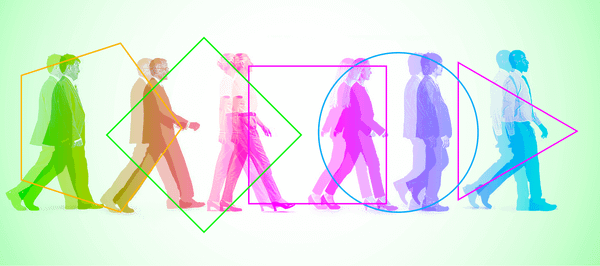
Behavioral science has long shown that cooperation is driven by how people perceive others, interpret norms, and internalize shared expectations. With its historical limitations, Muzafer Sherif’s Robbers Cave experiment demonstrated how quickly intergroup conflict can emerge—and, crucially, how it can be reduced through superordinate goals that require cooperation (McNeil, 1962). Gordon Allport’s contact hypothesis showed that structured intergroup contact under the right conditions—equal status, common goals, and institutional support—can reduce prejudice.
More recent field experiments by Elizabeth Paluck and colleagues (2023) show that norms can shift at scale when influential members of a community model new behaviors, transforming what people believe others expect of them. This connects directly to insights from The Other Invisible Hand, where Karla Hoff, Joseph Stiglitz, and Allison Demeritt (2026) argue that development and cooperation are also shaped by mental models and shared beliefs.
Building on this, we can think of social norms as an “invisible technology”—a distributed system that regulates behavior without formal enforcement, scaling expectations through networks of observation, imitation, and mutual accountability.
Few real-world examples illustrate this better than Antanas Mockus’s (2015) Cultura Ciudadana, which transformed urban behavior not primarily through sanctions but by making norms visible, performative, and collectively owned.
The implication for peacebuilding is profound: beyond traditional institutions, we can design interventions that leverage norms as enabling infrastructures—aligning perceptions, expectations, and behaviors—so that cooperation becomes socially natural.
In the talk, you highlighted the need to look at these from an integrated, multilevel perspective, something you called the ‘behaviorally informed systems governance’. What does this mean and can you elaborate a bit more on this?
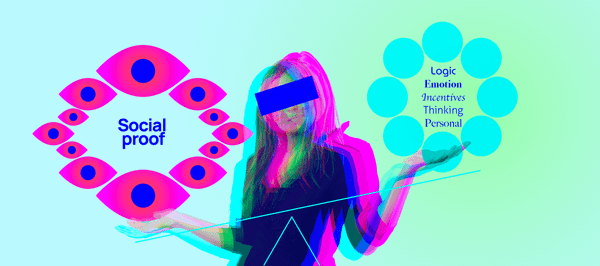
It starts from a simple but often overlooked insight: we don’t cooperate as isolated individuals, and we don’t behave only because of institutions—we behave within systems of biopsychology, norms, and infrastructure that interact simultaneously. Traditional approaches tend to focus either on incentives and regulation (the institutional level) or on nudging individual or social behavior. But the challenges we face today—polarization, mistrust, fragile peace—are collective action problems, and they require an integrated, multilevel approach.
This is where the 4-lever framework I am now applying becomes useful. It recognizes that behavior is shaped through four interacting layers:
- Automatic cognition (habits, emotions)
- Social cognition (norms, identity)
- Mental models (beliefs, narratives)
- Infrastructure (physical and institutional environments)
. Intervening in just one lever often fails. But aligning all four can transform how people experience cooperation in daily life.
Now, what makes this truly powerful is when you connect it to Juan Camilo Cárdenas’s C² framework (2026). Cárdenas shows that sustainable change does not scale from individuals alone, but from communities interacting with communities—what he calls “community times community.” So behaviorally informed systems governance is not just about designing better policies; it is about activating networks of coordinated collective action. Change begins locally but spreads through networks, reinforcing norms and shaping institutions.
In that sense, governance becomes less about top-down control and more about orchestrating cooperation across levels: brain → norms → communities → institutions. And this is especially relevant today, because in a world of distributed power—where the Global South is playing a larger role—we need governance models that are not only institutional, but behavioral, networked, and scalable from the ground up.
And given the current geopolitical state, why is this relevant today?
The current geopolitical moment is not just a crisis of power or institutions—it is a crisis of cooperation, rooted in what many describe as a metacrisis. The metacrisis reflects a deeper misalignment between the complexity of today’s global challenges and the psychological, social, and institutional systems we rely on to address them. We are seeing this play out as declining trust, rising polarization, fragmented information ecosystems, and weakening legitimacy of institutions.
From a behavioral perspective, these are interconnected signals that the conditions that enable cooperation are eroding. Under these conditions, individuals and societies shift into what we’ve described as mindfreeze, making it harder to sustain dialogue, compromise, and collective action even when it is urgently needed.
This is why behaviorally informed systems governance matters now.
If the metacrisis is, at its core, a breakdown in how we coordinate and cooperate at scale, then the response cannot rely only on top-down institutional redesign or geopolitical negotiation.
It requires rebuilding the behavioral foundations of cooperation across levels. The 4-lever framework helps align automatic cognition, social norms, mental models, and infrastructure, while Juan Camilo Cárdenas’s C² framework (2026) shows how these changes scale through networks of communities.
This aligns closely with the visionary work of Elinor Ostrom, who demonstrated that complex problems are best addressed through polycentric systems—multiple, interacting centers of decision-making rather than a single centralized authority. In a more fragmented and multipolar world, where coordination is distributed, the ability to activate bottom-up, networked, and polycentric cooperation becomes essential. In that sense, this is not just a behavioral insight—it is a new paradigm for governance in the age of the metacrisis: designing systems where cooperation is not assumed, but intentionally cultivated and scaled.
Please share with us a bit about the work you’ve conducted at Neuropaz in Colombia and how this interacts with all that you’ve just said?
Over the past five years, Neuropaz has also focused on building a translational ecosystem that connects cutting-edge behavioral science with practitioners, policymakers, and communities working on peace in Colombia and beyond. We’ve organized a series of high-level events designed not just to share knowledge, but to translate science into action—bringing together the leading researchers in Peace science from around the world, multilateral agencies, public officials, civil society leaders, victims of violence, ex-combatants and international organizations such as Innovations for Poverty Actions, BUSARA, The International Rescue Committee, United Nations, and allies in Colombia such as Comfama and UNDP.
A key milestone was our February 6 global online event with 1,000 participants from 80 countries, organized in collaboration with The Behavioral Scientist, which convened an extraordinary group of contributors, including Nobel laureates such as James Robinson and Juan Manuel Santos, and leading scholars like Elizabeth Paluck.
The goal was to bridge disciplines and geographies, showing how behavioral science can inform real-world challenges such as reframing funding, updating diplomacy, and using technological advances to save lives and inform peace-making and peace-building.
In 2026, marking the 10-year anniversary of the Colombian Peace Agreement, we are planning a major set of initiatives to reflect on lessons learned and push the field forward. In Colombia, we are working with Fundación Compaz to anchor these conversations locally, ensuring that the voices and experiences of communities remain central. At the same time, we are collaborating internationally with King's College London through the XCEPT Programme to connect Colombian insights with global research on conflict and peace in fragile settings.
The ambition is to create a truly multilevel dialogue—linking local realities, national policy, and global science—so that the next decade of peacebuilding is not only informed by evidence, but also designed as a collective, networked effort to strengthen the psychological and social foundations of peace.
Finally, we are crowdfunding a documentary on Emile Bruneau’s legacy, and working on a movie about the lessons from the Colombian 10 year peace process.
Finally, why are we discussing that in the Global South group? How do these lenses add to this perspective?
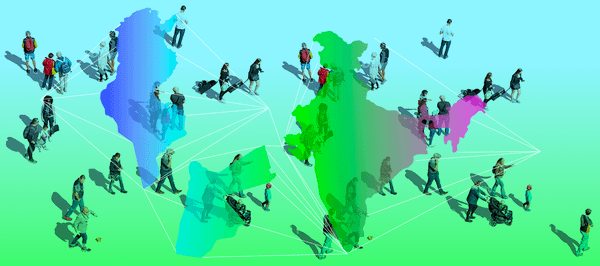
The Global South is is increasingly a driver of how the future of cooperation will be designed. As Alexander Stubb emphasized in his speech in India, the emerging global order is becoming more distributed and multipolar, with countries in the Global South playing a decisive role due to their demographic weight, economic growth, and geopolitical autonomy.
Many of our societies are navigating the metacrisis in real time—managing institutional fragility, rapid urbanization, technological disruption, and deep social diversity simultaneously. This makes visible something fundamental: cooperation cannot be assumed; it must be actively built under complex, high-pressure conditions.
This positions the Global South as a critical laboratory for understanding how trust, norms, and collective action emerge when traditional governance models are under strain.
Behavioral science and neuroscience add a powerful lens to this perspective by helping us understand the microfoundations of cooperation within this new global reality. They explain how people interpret uncertainty, how identities shape geopolitical attitudes, and how social norms can scale through networks to sustain cooperation even when institutions are evolving.
The Global South can not only gain geopolitical relevance. Its behavioral science communities are also in position to shape the future of how we think about cooperation itself. It offers the opportunity to move from a model where cooperation is imposed from the top down to one where it is designed, activated, and scaled from the ground up, informed by behavioral science and rooted in real-world complexity.
Acknowledgement
Members of Bescy’s Global South group contributed to this article: Ammaarah Martinus, Caroline Reis, Divyani Diddi and Emilia Rivolta.
References
1. Bar-Tal, D. (2007). Sociopsychological foundations of intractable conflicts. American Behavioral Scientist, 50(11), 1430-1453.
2. Bar-Tal, D. (2019). The challenges of social and political psychology in pursuit of peace: Personal account. Peace and Conflict: Journal of Peace Psychology, 25(3), 182.
3. Ben Hagai, E., & and Bilali, R. (2025). Integrating Geopolitics Into the Psychological Study of Intergroup Conflict and Violence: The Role of Collective Narratives. Journal of Social Issues, 81, e70040. https://doi.org/10.1111/josi.70040
4. Cardenas, J. C. (2026). The development revolution will not be nudged: The c2-frame approach as a proposal. World Development, 202, 107348.
5. Halperin, E., Hameiri, B., & Littman, R. (Eds.). (2024). Psychological intergroup interventions: Evidence-based approaches to improve intergroup relations. Routledge. https://doi.org/10.4324/9781003288251
6. Hoff, K., Demeritt, A. and Stiglitz, J. (2026) The Other Invisible Hand, The Agency Fund. Available at: https://theagencyfund.substack.com/p/the-other-invisible-hand .
7. Malovicki-Yaffe N, Khan SA and Paluck EL (2023) The social and psychological effects of publicly violating a social norm: a field experiment in the Satmar Jewish community. Front. Soc. Psychol. 1:1290743. doi: 10.3389/frsps.2023.1290743
8. Mockus, A. (2015) Opinion | The Art of Changing a City. Available at: https://www.nytimes.com/2015/07/17/opinion/the-art-of-changing-a-city.html.
9. Sherif, M. (1988). The robbers cave experiment: Intergroup conflict and cooperation.[Orig. pub. as Intergroup conflict and group relations]. Wesleyan University Press.